Wednesday, September 9, 2020

Reading Notes: Homer's Iliad Part B

 File:Greece scene of the trojan war vase.jpg - Wikimedia Commons

(Greece scene of the Trojan War vase)

    The second part of the Iliad focused on Hector, the son of King Priam. In the first part of the story Hector is stubborn and naive and doesn't recognize that if Achilles joins the fight he is pretty much done for. It seems that his character has changed and that he has come to the conclusion he will die and it will be by the hand of Achilles. It's interesting to me because Hector and Achilles oddly parallel each other. They both had a sort of revelation about the fight. Achilles found that fighting would waste the amount of time left he has in his life. Although, he does decide to retaliate after learning of the death of his most loved ally, Patroclus. And Hector comes to terms that he must stand outside the gates of Troy and battle with Achilles for his city. I liked that the two central characters were given similar character arcs. It gives me plenty of ideas for what I could do in the future. If I were to rewrite this story I would probably play into the similarities between the two warriors a bit more than it does here. 

Bibliography: "Homer's Iliad" (retold by A.J. Church)

Tuesday, September 8, 2020

Reading Notes: Homer's Iliad Part A


 File:Achilles fighting against Memnon Leiden Rijksmuseum voor Oudheden.jpg  - Wikimedia Commons

Achilles in Battle

    When reading about Achilles during the battles against the Trojans, I couldn't help but wonder if there was going to be any part that told his "origin story". Most of us know Achilles from the phrase Achilles heel. The story where his mother, Thetis, dipped him into the River Styx by his heel. After coming out of the river he was invulnerable. Except for his heel, where his mother had held him by. Upon doing some after-reading research. I found that Achilles' origin story wasn't Homeric. Therefore, I couldn't have read anything about his childhood. 

    Something I found quite interesting was Achilles' new outlook on life. In The Embassy to Achilles; Odysseus, Phoenix, and the two heroes Ajax, were sent by King Agamemnon to convince Achilles to rejoin the Greeks in their attempts to thwart the Trojans. No matter how much money or how many cities were included in a dowry, Achilles stood his ground and said no. Achilles is the most fearsome warrior of the Agamemnon army and he even said so himself that in his youth he was always down for a fight. Now, after having his people pull out from battle for a while, he understands what is truly important in his life. Dying a fulfilled life unknown seems more important to him then dying young and famous. I would be interested in possibly doing a retelling of this but bridging the gap between his departure from the Agamemnon army to when the chiefs come to convince his return. I feel that I could illustrate the character development in his beliefs. It would be enjoyable because Achilles' character is the one that I felt more entranced by. 


Original Story: "Homer's Iliad" (retold by A.J. Church)


Monday, September 7, 2020

Feedback Thoughts

 Feedback Group Communication - Free image on Pixabay

Feedback: Group Communication

I wanted to look into the negative side of feedback and how our minds find a way to twist feedback into criticism. I read in Why rejection hurts so much — and what to do about it that our brains are hardwired to think that way. The same area of our brain that experiences pain is the area that is activated when we experience rejection. But nonetheless, most of the pain is self-inflicted. We become self critical when we receive negative feedback on something we thought was good work. Thus, the second guessing of ourselves starts. The good news is we can stop this from happening. The article says that if you reaffirm things about yourself that are valuable you can help rebuild your self confidence after taking a blow. Another thing one can do is revel in the positive feedback you have been given. Most likely somebody is going to leave you with positive feedback as well. Dig into the positive suggestions and believe what they say. I read these tricks on Silence the Critical Voices in Your Head. Overall, even if our brains are wired to focus on the negative there are many things you can do to avoid having a pity party for yourself and actually take the feedback for what it is. Somebody giving suggestions in order to help you!  

Topic Brainstorm

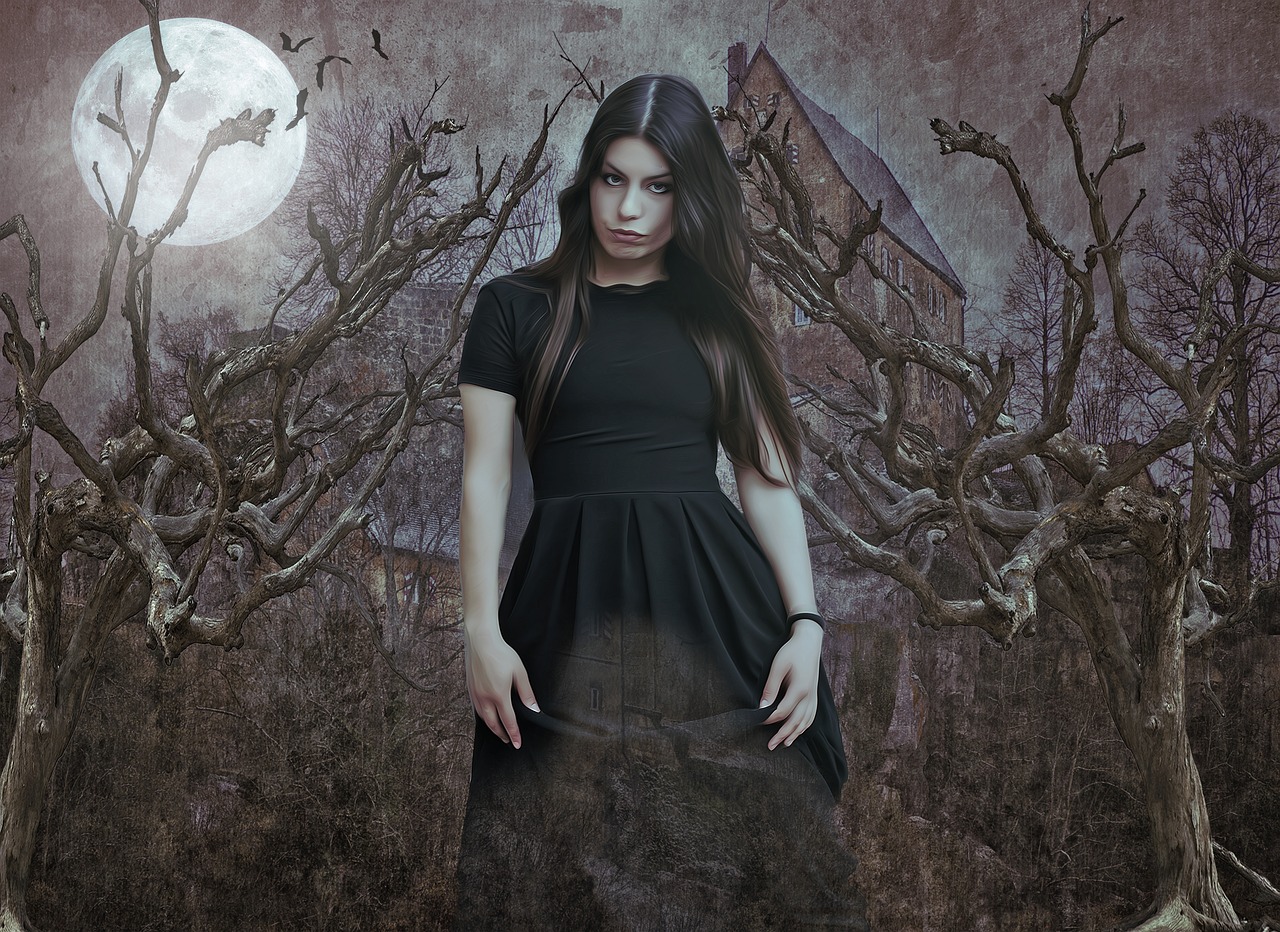
Vampire, vamp, gothic, goth, dark - free image from needpix.com

Gothic Vampire


The Soldier and the Vampire

This story is a part of a collection of Russian ghost stories. It involves a soldier going to his home village to find a vampire terrorizing the town. He was able to destroy the vampire and bring a couple of newlyweds back to life. I have always had a very strong liking to vampire lore. "The Twilight Saga" and "The Vampire Diaries" are two of my favorite film/TV adaptations from books. I can see myself taking this story and putting a modern spin on it. In the original story, the vampire is described as a warlock. The actual word vampire isn't used at all throughout the story. I'd like to take this plot and add my own ideas into it!


The Tri-Delta Ghost

This story I was already familiar with. I personally own Jeff Provine's "Campus Ghosts of Norman, Oklahoma". I think being able to create a storybook out of the ghost stories that surround campus could be such a fun experience. Ghosts and the paranormal may just be my favorite type of lore. I watch Ghost Adventures on the Travel Channel every Friday night. I could easily make these stories narrative driven from the point of view of a student or even from the perspective of a psychic medium. For this topic the possibilities seem endless. I also can't help but be excited at the thought of writing scary stories. 


From Asgard to Utgard 

The Norse gods have interested me since I started getting into the Marvel movies. Thor, being one of the Avengers, always intrigued me. After reading this story of his adventure to Utgard I think I could find a new way to retell it. Because he is very well known for appearing in the marvel comics and films, I started to brainstorm how I could tell this tale in the setting of the Marvel Cinematic Universe. It would make it entertaining to read as well as establish a connection to help the audience understand more of his background while seeing him in a setting they're used to. 


Hera, Leto and Zeus

After some research on the greek gods and their trysts, I found this story of Leto and Zeus to be quite interesting. Hera is quite the vindictive goddess. While reading I couldn't help but compare it to high school drama. This gave me the thought of turning this story into a high school set drama series. I could keep the characters the same with their powers and all. Just change their eage and place them in a high school for the gods. I could include small nods to other Greek mythology in the narration. Overall, I believe this could be a really fun assignment to take on.    

Wednesday, September 2, 2020

Week 2 Story: The Basilisk's Return


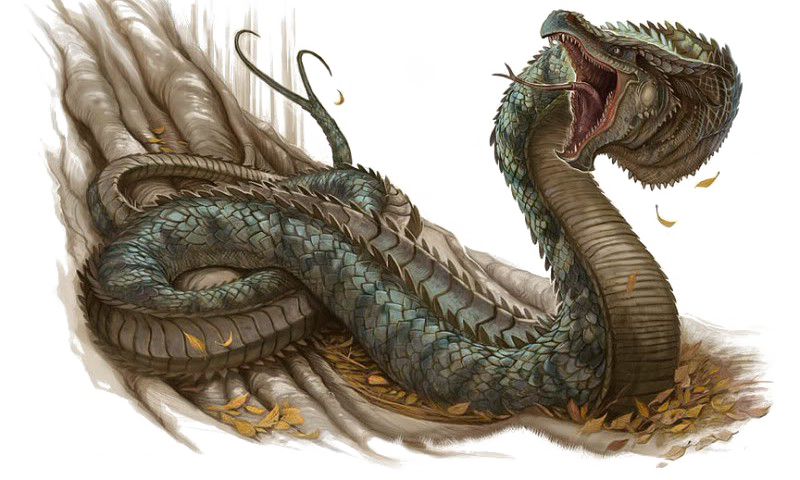
Basilisk Snake PNG Photo
My portrayal of the Basilisk

    Carrie Inglewood was a fairly courageous student. As could be seen by the colors she wore around her school. She was a Gryffindor, some of the strongest and most daring to walk the halls of Hogwarts School of Witchcraft and Wizardry. So, it came to no surprise when her friend Angus Capell had asked her to go down into the Chamber of Secrets she happily obliged. What she didn’t know was that Angus had been down there a day before on his own accord. And that this mission was based on his ulterior motives.


    A Slytherin, Angus was able to get into the chamber on his own. He can speak to snakes and was able to get past the Parseltongue door. While in the chamber he stumbled upon a golden chalice. He was mesmerized by the glimmer in the inscription. He lifted it off the ground to read it. Before he could look at the first letter a large Basilisk emerged from the water in the moat that surrounded the chamber. Careful not to look at it in the eye, Angus kept his eyes placed firmly to the ground. The Basilisk bared its teeth and spoke to the boy. It told him for attempting to steal one of its possessions he must do something in return. He must bring him a Gryffindor. And so, he did.


    Carrie and Angus walked back into the chamber. They looked around for a few minutes and the Basilisk emerged as it did the day before. Carrie shut her eyes and stood her ground. While Angus slinked back toward the exit of the chamber. The Basilisk’s menacing voice told Carrie she was now trapped down here. She could not leave and would be his prisoner. She obliged and took the situation or what it was. All the while she was planning escape routes in her head. For the next two days she stayed there, helping the Basilisk shed its scales from time to time. On the third day the Basilisk came to her and asked for a favor. It requested her to cut its head from its neck. She was surprised to hear this and stood confused. She responded telling it that she had nothing to cut it with. And like that a glimmer appeared in the corner of her vision. She looked to see the sword of Godric Gryffindor, one of the four founders of Hogwarts, appearing on a nearby rock.


    With one hand and one fell swoop she cut the Basilisk’s head from its body. She wiped her brow only to find them furrow at the sight of a new head taking its place. She didn’t let this get the best of her as she took a step back and with both hands this time sliced through the flesh of the beast. This time, instead of another head growing, the beast started to transform in front of her eyes. The final form of the Basilisk had become a girl. A girl wearing the same colors as Carrie. Despite the older look of the uniform Carrie concluded she was in Gryffindor robes. The girl looked at Carrie and gave her a smile. She explained to her that a dark wizard had cast a spell on her 100 years ago and had turned her into the Basilisk. She asked Angus to bring her a Gryffindor because she knew that only a Gryffindor could go through with the tasks she would have asked. Carrie and the Gryffindor girl walked hand in hand out of the chamber. They chatted about the time that had passed and headed straight for the Headmaster’s Office.


Author's Note:
After reading the original story, the image I had of a Basilisk was similar to the one from the second Harry Potter film/book. I found that I could create an adaption of this story using the world of J.K Rowling with my own original characters. I also wanted to change the ending a bit from the two characters marrying to two female characters bonded by their house. 

Bibliography. "The Key of Gold" by Josef Baudis (1922) Source.     

Reading Notes: Week 2 Anthology


Pygmalion by Tony Kline (2000)

CHARACTERS

    Pygmalion, The statue and Venus

PLOT

    Pygmalion, a sculptor, has seen the evil and wicked ways of his village's ladies and vows to remain single. Because he is such a wonderful sculptor he created a sculpture of a beautiful woman. Who, at times, one would think was actually a real woman. At the Venus festival, Pygmalion prayed to the gods for a wife like the sculpture he created. The gods, hearing him, granted his wish and upon his arrival home he finds his statue transformed into a real woman. He lives out his life with the statue-turned-girl and ends up marrying her. 

TECHNIQUES

    The author used many high detail images. Especially, when portraying the displays of affection between Pygmalion and his sculpture. The author also uses specific types of imagery for different things. They use more masculine and rough descriptors when talking about the bull at the Venus festival. On the other hand, when talking about the sculpture, the author uses more feminine and dainty imagery to describe her. I like how this helped bring across the duality of ideas throughout the story.  

File:Pygmalion and Galatea MET DP-13618-004.jpg - Wikimedia Commons

Pymalion and Galatea


Tuesday, September 1, 2020

Week 2 Reading Overview


Choose from CLASSICAL and/or BIBLICAL units for Weeks 3 and 4.

Week 3: Homer's Iliad

Week 4: Cupid and Psyche

Choose from MIDDLE EASTERN and/or INDIAN units for Weeks 5 and 6.

Week 5: Ancient Egypt 

Week 6: Life of the Buddha

Choose from ASIAN and/or AFRICAN units for Weeks 7 and 9. [Week 8 is review week.]

Week 7: Brer Rabbit 

Week 9: Japanese Mythology

Choose from NATIVE AMERICAN units for Weeks 10 and 11.

Week 10: British North America 

Week 11: Cherokee

Choose from BRITISH and/or CELTIC units for Weeks 12 and 13.

Week 12: Celtic Tales

Week 13: Canterbury Tales

Choose from EUROPEAN units for Weeks 14 and 15.

Week 14: Russian

Week 15: Inferno


Week one I decided to start off with some of my favorite mythology. I've got a soft spot for the Greeks and their stories. I'm also very excited to read about the stories from the Native Americans from British North America. My home state, Virginia, was originally one of the thirteen British colonies so I'm intrigued to see if I read an stories from familiar tribes. The Russian stories also looked great. I am a big fan of the supernatural so ghosts, vampires and witches is right up my alley. It looks like I am going to have a lot of reading to do but it's a good thing I am excited for it!

Week 15 Story: Dante's Inferno The Video Game

  Video game Nathan had finally convinced his mom to buy him the best birthday present ever. The all new, Dante's Inferno: The Video Gam...